From Supply Chain Uncertainty to Controlled Execution

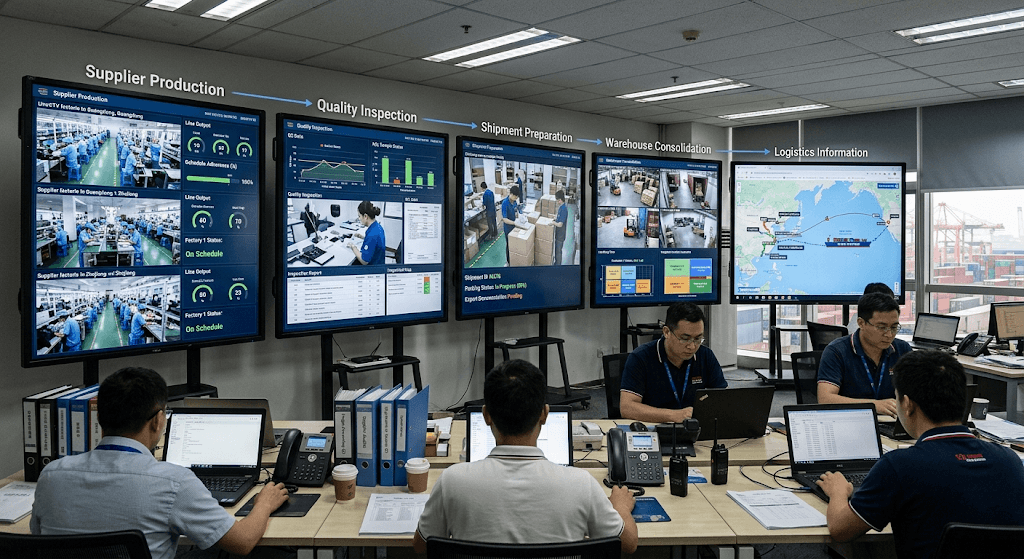
HXTECH helps overseas buyers understand what is happening on the China side, verify the facts, control execution, manage suppliers, consolidate operations, and continuously improve total landed cost.

You manage your customers. We manage what happens on the China side.

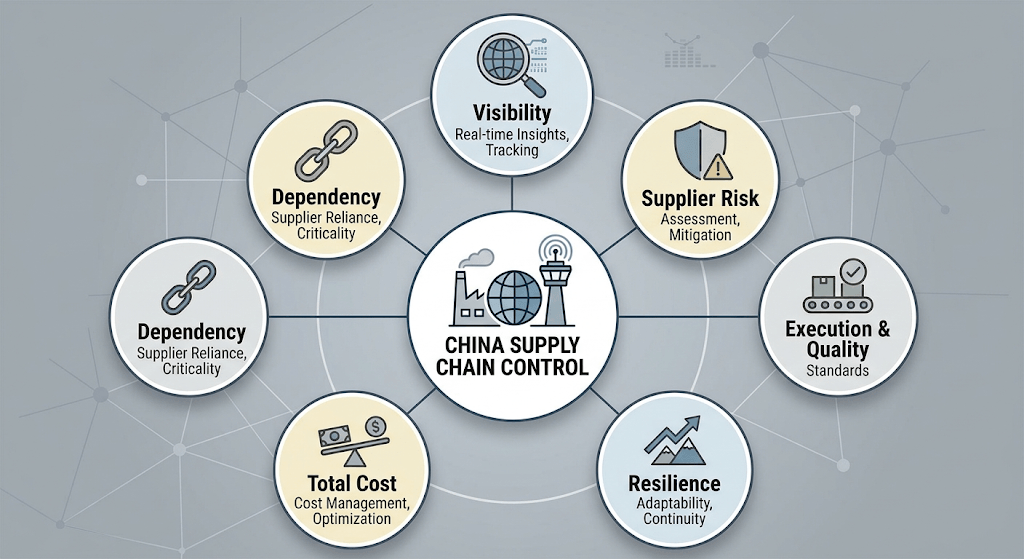
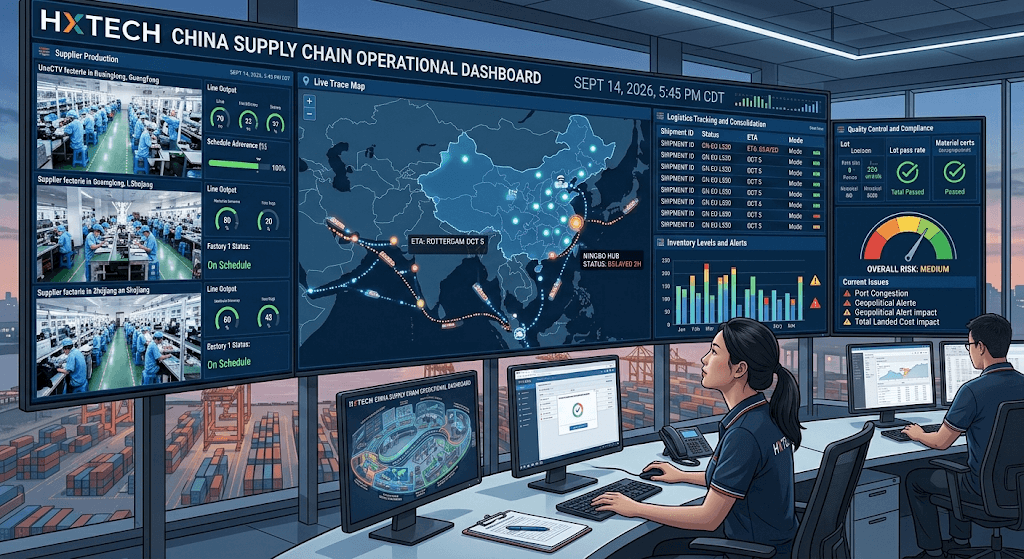
china supply chain control room

This Is Probably Why You're Here

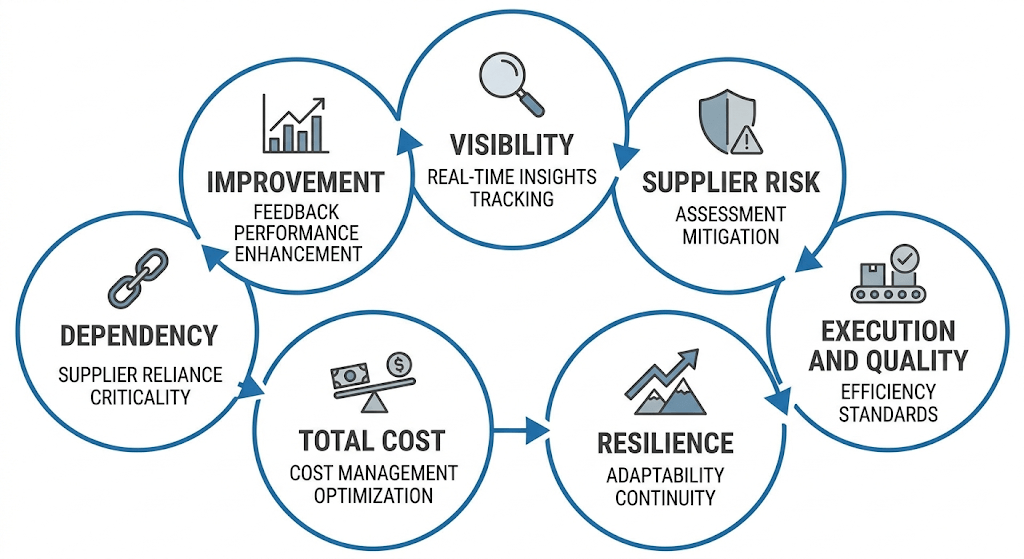
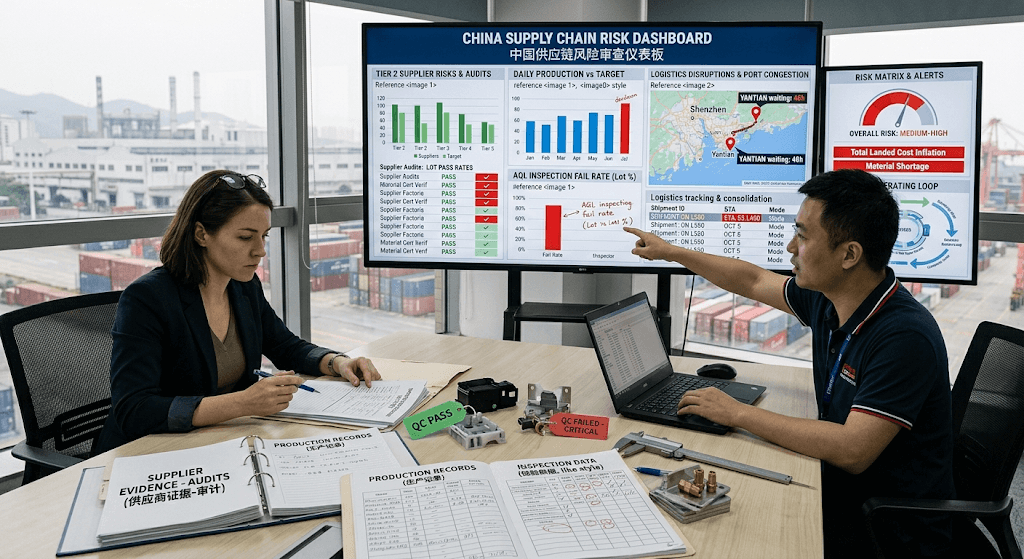
china supply chain control loop
Maybe the sample looked right and the bulk order didn’t.
Maybe a supplier’s bank account changed and nobody could say for certain whether the new details were real.
Maybe you’ve got three suppliers on paper and no idea if they’d all go quiet for the same reason, in the same week.
Maybe you just don’t know what’s happening on the factory floor between the PO and the shipment — and at this point you’ve stopped pretending you do.
None of that is bad luck. It’s what happens when nobody is actually watching the China side of the order. Not checking in on it. Watching it.
That’s the gap HXTECH works in.

The Six Questions You're Actually Asking

Strip away the industry language, and every China sourcing problem comes back to one of six questions. We use these to work out where you actually stand before we talk about what to do about it.
1. Visibility — Can I see what’s happening? You don’t automatically know what’s going on inside a factory 7,000 miles away. Production status, quality conditions, who’s actually running the line — most of it is invisible unless someone is checking it directly, on site.
2. Supplier Risk — Can I trust this supplier to do what the business needs? A supplier that looks fine on paper and a supplier that’s actually capable of hitting your spec, on your timeline, at your volume — those are two different things. One you can verify. The other you’re assuming.
3. Execution & Quality — Can I control what happens after I place the order? Placing an order isn’t the same as controlling how it gets made. Without defined checkpoints, nobody catches a problem until it’s already sitting in your warehouse.
4. Resilience — What happens when something goes wrong? Not if. The real question is whether your supply chain keeps moving when one piece of it doesn’t — or whether a bad week at one factory turns into your bad quarter.
5. Total Cost — What does this actually cost? The unit price on the invoice isn’t the number that matters. Rework, delay, a fragmented shipment, a packaging decision made without thinking — all of it shows up somewhere, usually after the fact.

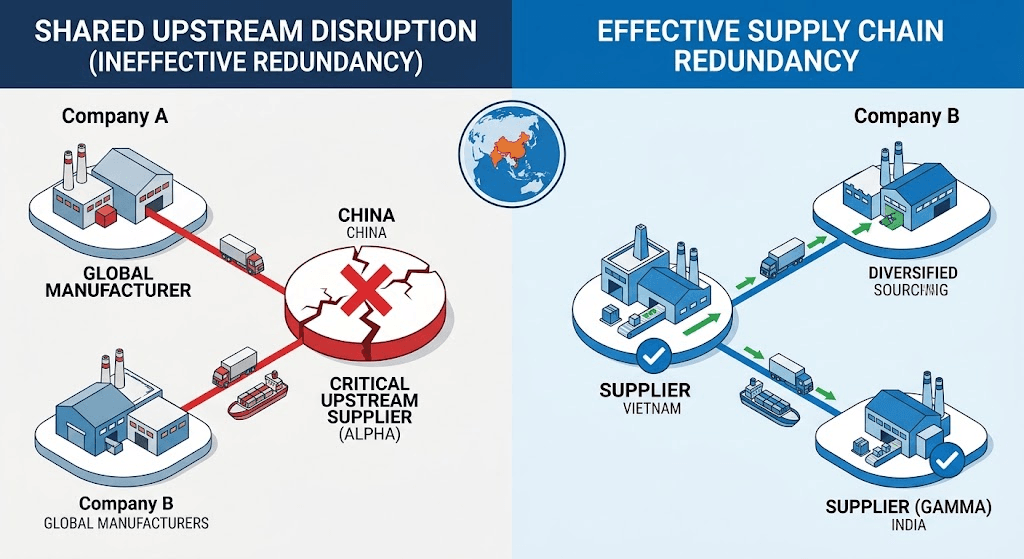
6. Dependency — How hard would it be to change this if I had to? Two suppliers isn’t automatically two options. If they both trace back to the same material, the same region, the same port, you don’t have redundancy. You have the appearance of it.
six china supply chain risk questions

How Risk Actually Moves Through a Supply Chain

Most supplier reviews stop at question two: is this specific supplier okay? That’s necessary. It’s also not enough, because it misses how supply chains actually fail.
It’s a network, not a list. Your Tier-1 supplier depends on Tier-2 processors, who depend on specific materials, regions, ports, and logistics lanes. A problem at any one of those points doesn’t stay where it started. It moves.
Redundancy on paper isn’t redundancy in practice. Supplier A and Supplier B can both go quiet in the same week if they share the same upstream processor, the same raw material, the same region, the same port. Two names, one point of failure. We call the real version of this effective independence — and it’s the actual test, not how many names are on your supplier list.
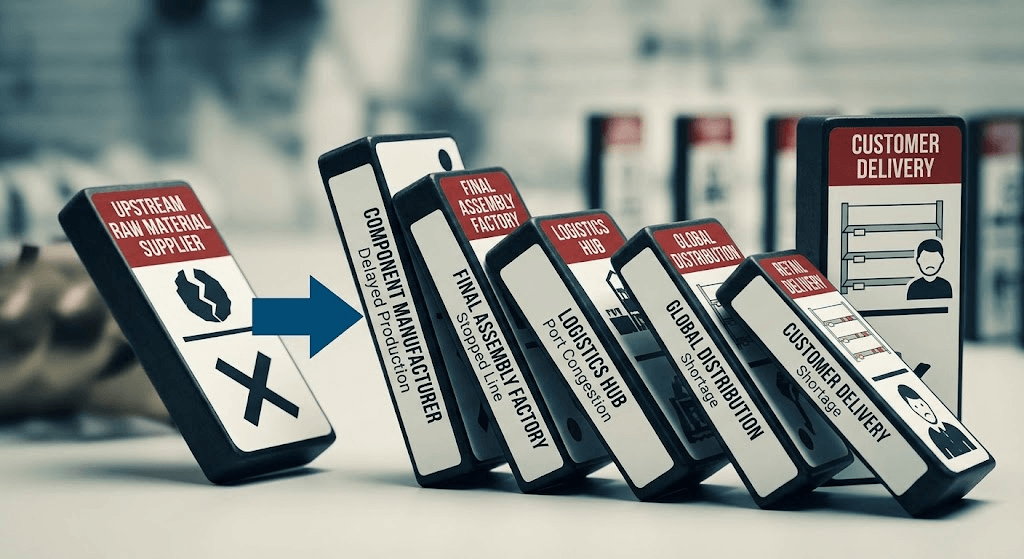
Once something breaks, it doesn’t stop where it started. A shortage at a Tier-3 material supplier reaches your Tier-1 factory, then your production schedule, then your warehouse, then the customer who’s waiting on the order. Knowing that path ahead of time is the difference between a delay you manage and one that manages you.
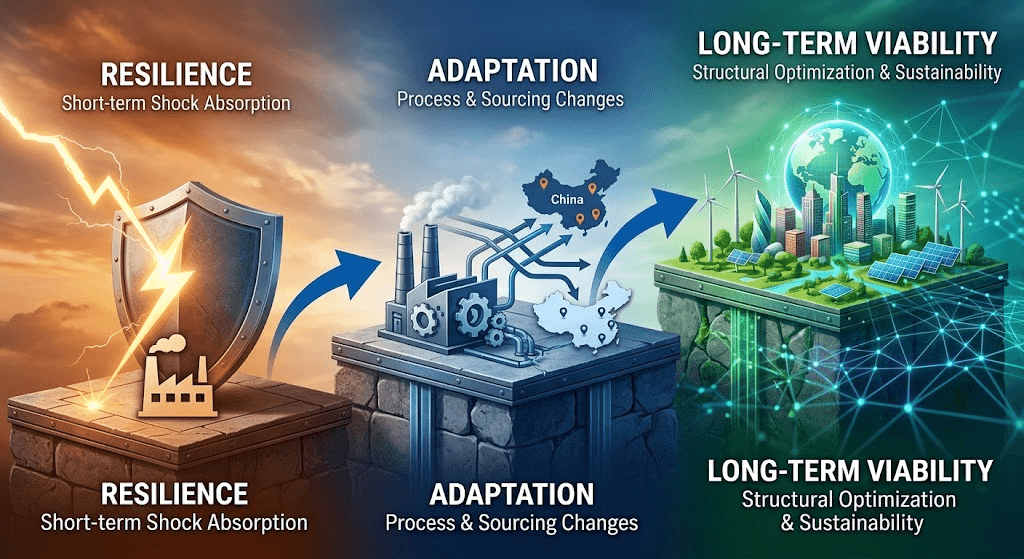
Recovering, adjusting, and rebuilding are three different problems. Resilience is whether you can recover from a disruption. Adaptation is whether you can adjust when conditions genuinely change — new regulation, a shifted cost structure, a material restriction. Viability is the hardest one: if the old way of doing this is gone for good, can the business reconfigure and keep going?

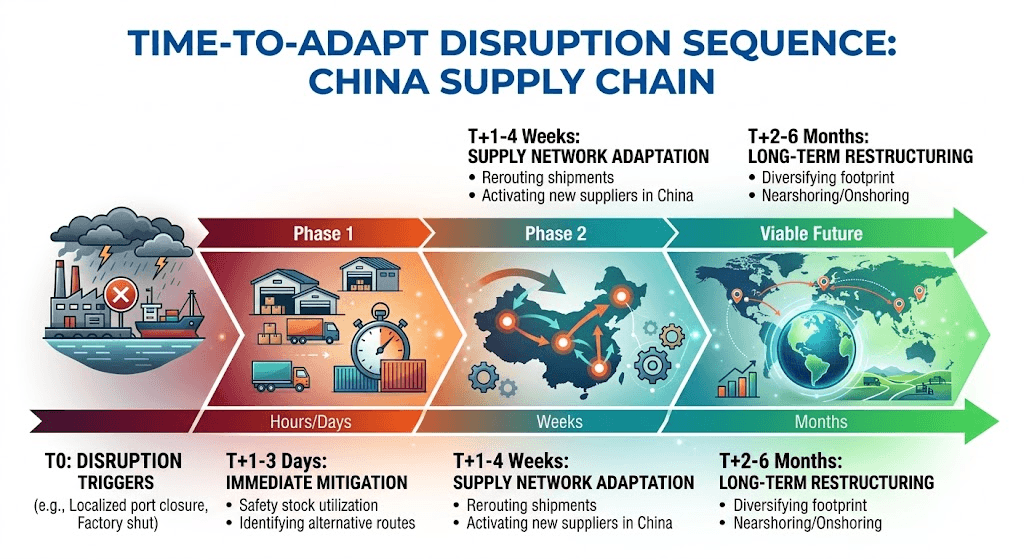
And speed matters more than most buyers assume. Having an alternative supplier doesn’t help much if it takes eight weeks to activate them. The sequence that actually matters is detect, assess, decide, activate, transfer, recover — and most of the time gets lost in the first two steps, simply because nobody had the information ready before they needed it.

What Unmanaged Risk Actually Costs

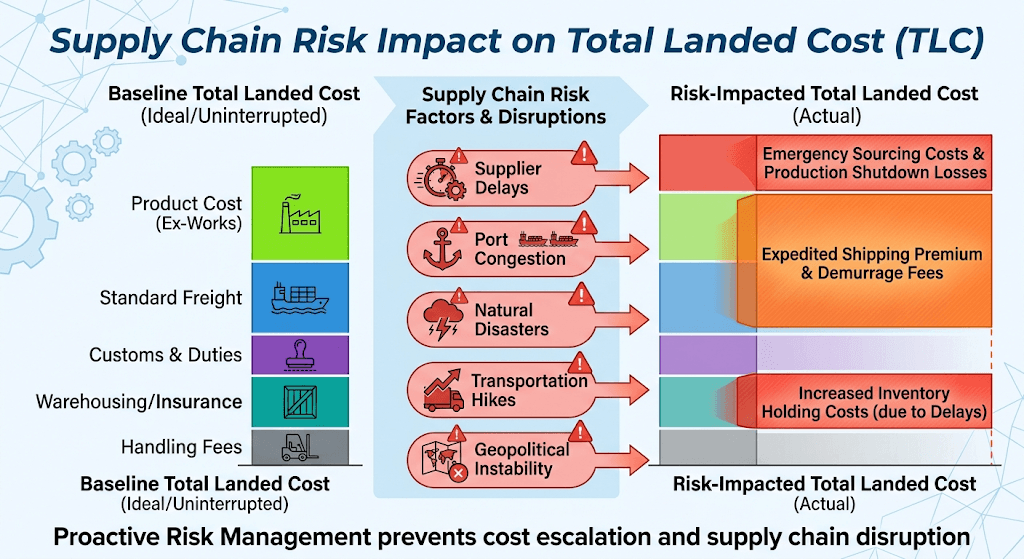
total landed cost risk chain
“This creates risk” doesn’t tell you anything useful. Here’s what actually happens when a China-side problem isn’t caught early:

A supplier problem becomes a production delay. A production delay becomes rework or a quality failure. That becomes a shipment disruption, then an inventory problem, then a customer problem, then a cost that wasn’t in the plan.

This is why we don’t stop at unit price. The number on the PO is one line. The real number is everything the current way you’re running the China side is quietly costing you — most of which doesn’t show up until it’s too late to do much about it.

How We Know What We Know

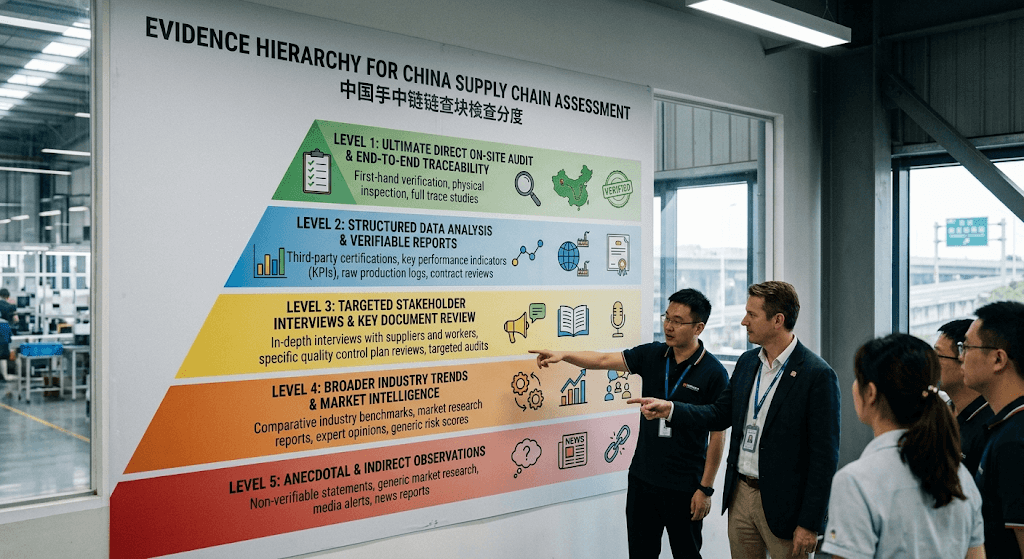
We don’t treat what a supplier tells us as fact. Before anything goes into an assessment, it gets sorted into one of three buckets:
Confirmed — backed directly by evidence we’ve seen ourselves.
Partial — supported, but not fully verified yet.
Missing — not established. We say so instead of filling the gap with a guess.
The rule is simple: don’t turn assumptions into facts, and don’t turn one bad experience into “this is just how China works.” Identity gets verified before capability. Capability gets verified before execution. Execution gets verified before we talk about commercial impact. Skip a step and the whole assessment is just a guess with better formatting.
evidence based supply chain assessment

What HXTECH Actually Does

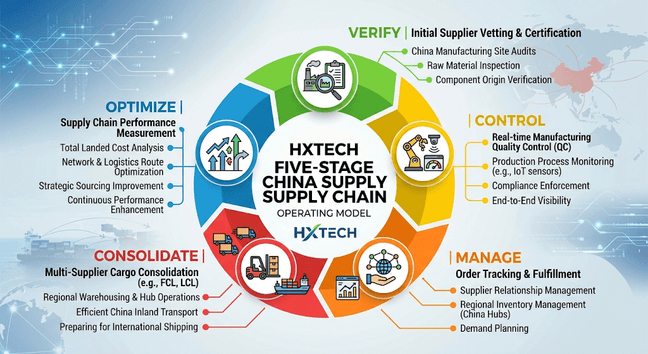
This is the operating model. Five stages, each one feeding the next — not five separate services you buy one at a time.
verify control manage consolidate optimize

VERIFY → CONTROL → MANAGE → CONSOLIDATE → OPTIMIZE


Verify. Before you trust a supplier, what do you actually know about them? We confirm identity, capability, and risk. Supplier Verification, Supplier Risk Assessment, Factory Audit.

Control. An order isn’t controlled just because it was placed. We turn what was agreed into checkpoints you can actually see. Supplier Quality Control, Production Monitoring, Pre-Shipment Inspection.

Manage. If you’ve got more than one supplier and nobody dedicated to running the China side day to day, that’s where things slip. We coordinate it. Supplier Management, Multi-Supplier Coordination.

Consolidate. Fragmented shipments and scattered suppliers cost more than they need to. We bring it together. Supplier Consolidation, Container Consolidation, Container Loading, Packaging Optimization.

Optimize. Purchase price isn’t the real number. We look at what it actually costs to get product from your supplier to your customer. Total Landed Cost Optimization.

Where the Next Problem Usually Comes From

We don’t start with a service. We start with a real problem you’re already dealing with — and the work doesn’t end at delivery. It tends to surface the next thing that needs attention.

Land. We solve the specific problem you came in with. 
Prove. You see the evidence that it was real, and that fixing it mattered. 
Grow. Where it makes sense, the work extends — more suppliers, more orders, more checkpoints. 
Systemize. It stops being a one-off project and becomes a standing process. Retain. The China-side control layer stays in place while your supply chain keeps running. 
Expand. New problems surface as the business grows, and we’re already positioned to help with them.
A supplier verification usually surfaces a quality control gap. A quality control gap usually surfaces a management gap. Fragmented suppliers usually surface a consolidation opportunity. That’s not scope creep. That’s just what happens once someone actually starts paying attention to the China side.
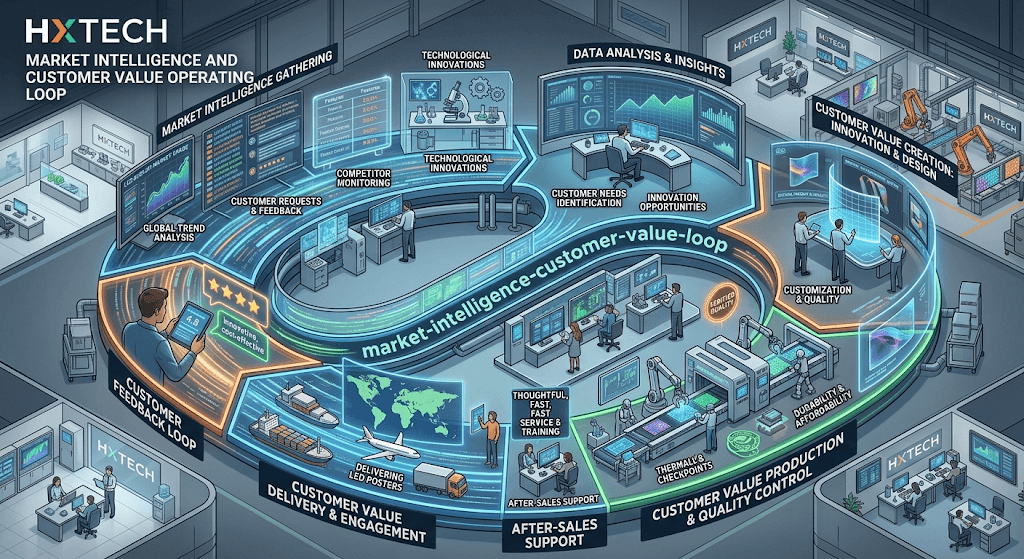
market intelligence customer value loop

What You Actually Walk Away With

china supply chain operational dashboard
Depending on what you came in with, this might mean:
• verified information about who your supplier actually is
• documented findings on the risk that matters
• what we saw on the factory floor — not what the factory told us
• evidence your quality standard is actually being followed, not just approved once
• a real read on production status instead of a guess
• inspection results before the goods leave China
• coordination across suppliers instead of you doing it by email at 11pm
• one consolidated shipment instead of five partial ones
• a packaging decision that actually saves container space
• a real number for total landed cost
• a ranked list of what to fix first
• a clear picture of what happens next
The point isn't a longer report. It's that you make the next decision with real information, instead of whatever the supplier said last week.

Who This Actually Fits

This is built for buyers who already depend on China for a meaningful part of what they sell — importers, distributors, manufacturers, OEMs, brands — and who are past the point where “the supplier said it’s fine” is good enough.

If that’s not quite where you are yet, that’s fine too.

See who this is built for →

Continue Exploring

Solutions — the five operating areas in detail: Verify → Control → Manage → Consolidate → Optimize
Who We Help — importers, distributors, manufacturers, OEMs, and brands managing recurring China supply chains /who-we-help/
Proof — the evidence, methods, and cases behind what we claim 
About HXTECH — who we are, why we exist, and how we operate 
China Supply Chain Risk Review — start with a structured review of your current China-side risk

Start With the Problem You Actually Have

You don’t need to fix your entire China-side supply chain before you start. Pick the one thing you’re least sure about right now — a supplier you don’t fully trust, quality that’s been inconsistent, a shipment that’s more fragmented than it should be, a landed cost that doesn’t add up — and start there.

Request a China Supply Chain Risk Review →

We start with the problem you actually have, the evidence available right now, and what’s really going on — then figure out what needs to be verified, controlled, or changed.

china supply chain risk review

Learn how we helped 100 top brands gain success.

Let's have a chat